The science
What's in Vim, and why.
Three active ingredients, at doses we print on the tin. No proprietary blends, no hidden amounts – just what's inside, where it comes from, and what the official sources say.

In every piece
Ingredients
What's inside.
Actives
Sweeteners
Gum & taste
Natural caffeine
From [guarana / green coffee – source to confirm]
About half a cup of filter coffee in every piece. Two pieces, about a full cup.
Caffeine is the world’s most widely consumed stimulant. It occurs naturally in coffee beans, tea leaves, guarana seeds and cacao – and the amount in a cup of coffee varies a lot, from about 50 to over 100 mg depending on the bean and the brew. For healthy adults, the European Food Safety Authority (EFSA) considers single doses of up to 200 mg, and up to 400 mg spread across a day, to raise no safety concerns.
Natural caffeine from [guarana / green coffee – source to confirm], measured to exactly 40 mg in every piece. That’s less than half of a typical filter coffee – so one piece is a smaller dose, two pieces a coffee-sized one, and you always know the number. No guessing how strong the barista made it.
Source: EFSA Scientific Opinion on caffeine (2015)
L-theanine
An amino acid found in tea leaves · [form from manufacturer]
Paired with the caffeine at 1 : 1.5, in every piece.
L-theanine is an amino acid found almost only in the tea plant, Camellia sinensis – it’s part of what gives green tea its savoury, rounded taste. Tea is the one everyday drink where caffeine and L-theanine naturally come together, and the pairing has been a topic of nutrition research for more than two decades.
We pair 60 mg of L-theanine with every 40 mg of caffeine – a 1 : 1.5 ratio, in every piece. EU rules haven’t authorised any health claims for L-theanine, so we don’t make any. We just tell you exactly what it is and how much is in Vim. [Source and form to confirm with the manufacturer.]
[Source from manufacturer]
Magnesium
As magnesium [citrate / malate – form to confirm]
Two pieces give 15% of the 375 mg EU reference intake.
Magnesium is an essential mineral – your body can’t make it, so it has to come from what you eat and drink: nuts, seeds, whole grains, legumes and leafy greens. It’s also the one active in Vim with authorised EU health claims: magnesium contributes to the reduction of tiredness and fatigue, and to the normal functioning of the nervous system.
Magnesium [citrate / malate – form to confirm]. A 2-piece serving provides 56.25 mg – 15% of the 375 mg EU reference intake, the level at which those claims can be used. [Final figure from the manufacturer.]
Reference intake: EU Regulation 1169/2011
Xylitol
Sugar alcohol · in Finland, famously made from birch
The main sweetener, so there is no sugar in Vim.
Xylitol is a sugar alcohol (a polyol) that occurs naturally in many fruits and vegetables – our own bodies even make small amounts of it every day. It tastes almost exactly as sweet as sugar, without the aftertaste many sweeteners have. And it has a Finnish story: xylitol research took off in Turku in the 1970s, and Finland is where xylitol gum went mainstream.
It’s our main sweetener, so there’s no sugar in Vim. Under EU labelling rules, xylitol counts as 2.4 kcal per gram, against 4 for sugar. Like all polyols, eaten in large amounts it can have a laxative effect – which is why the tin carries the notice EU rules require. [Amount per serving from the manufacturer.]
[Amount per piece from manufacturer]
Stevia
Steviol glycosides from the stevia leaf
A small amount rounds out the sweetness.
Steviol glycosides are the sweet compounds in the leaves of Stevia rebaudiana, a plant native to Paraguay and Brazil, where the leaves have sweetened drinks for centuries. They’re intensely sweet, so very little is needed, and they add virtually no calories. In the EU they’re an approved sweetener, E 960.
Xylitol does most of the work; a small amount of stevia rounds out the sweetness – so we never need sucralose, aspartame or acesulfame K. [Amount per serving from the manufacturer.]
[Amount per piece from manufacturer]
Chicle gum base
From the sap of the sapodilla tree · [pending confirmation]
A plant-based gum base, no synthetic polymers.
Chicle is a natural gum tapped by hand from the sapodilla tree (Manilkara zapota) in the forests of Mexico and Central America, much like rubber. It was the base of the first commercial chewing gums in the late 1800s – before most of the industry switched to cheaper synthetic polymers. In other words, plastic.
We went back to the original. A plant-based gum base means no synthetic polymers in the gum you chew. [Gum base type and supplier pending manufacturer confirmation.]
[Supplier pending]
Natural flavour
[Launch flavour to be decided]
Named on the tin and listed here in full.
Under EU rules, a flavouring can only be called natural if it’s made from natural source materials – plants, fruit or other foods – using physical, enzymatic or microbiological processes. A “natural [fruit] flavouring” has to get at least 95% of its flavour from the fruit it’s named after.
[Launch flavour to be decided.] Whatever we choose, it will be named on the tin and listed in full here.
Sea salt
From evaporated sea water
A pinch, for taste.
Salt isn’t there to make Vim salty. In tiny amounts it softens any bitterness and makes sweetness taste rounder and fuller – the same reason it goes into caramel and chocolate.
Sea salt, from evaporated sea water. The exact amount per serving will be on the nutrition table. [Figure from the manufacturer.]
[Amount on the nutrition table]
Amounts per piece, as printed on the tin. [Final figures, sources and forms from the manufacturer and regulatory sign-off.] Full references are listed below.
The evidence
Three actives, fully disclosed.
Natural Caffeine
40 mg per pieceCaffeine from [guarana / green coffee – to confirm]. For scale, the European Food Safety Authority puts a 200 ml cup of filter coffee at about 90 mg1. At 40 mg a piece, you choose a smaller dose or a coffee-sized one – instead of all or nothing.
L-Theanine
60 mg per pieceAn amino acid found naturally in tea leaves (Camellia sinensis), where it occurs alongside caffeine. EU rules haven’t authorised any health claims for L-theanine2, so we make none. Vim pairs it with caffeine at a 1 : 1.5 ratio.
Magnesium
28 mg per pieceMagnesium [citrate / malate – to confirm]. A 2-piece serving provides at least 15% of the EU reference intake of 375 mg3. At that level, magnesium contributes to the reduction of tiredness and fatigue.4,5
Caffeine in context
How much is 40 mg?
[Warning text for children and pregnant or breastfeeding women – final wording from regulatory consultant.]
Source: EFSA explains risk assessment: Caffeine (2015). Approximate values – caffeine content varies by product and preparation. The 500 ml energy drink is EFSA’s 250 ml figure (80 mg) doubled.
Your day
Add it up.
Pick what you'd usually have in a day and see where Vim fits. One piece is 40 mg.
Vim · 1 pieceVim
40 mg each
Filter coffee (200 ml)
90 mg each
Espresso (60 ml)
80 mg each
Energy drink (500 ml)
160 mg each
Black tea (220 ml)
50 mg each
Cola (355 ml)
40 mg each
Your day
0mg
Guidance from EFSA (2015) for healthy adults. Not recommended for children or for pregnant or breastfeeding women. Typical values – caffeine varies by product. [Final wording: regulatory consultant.]
How it's made
Made with intent.
01
One measured dose per piece
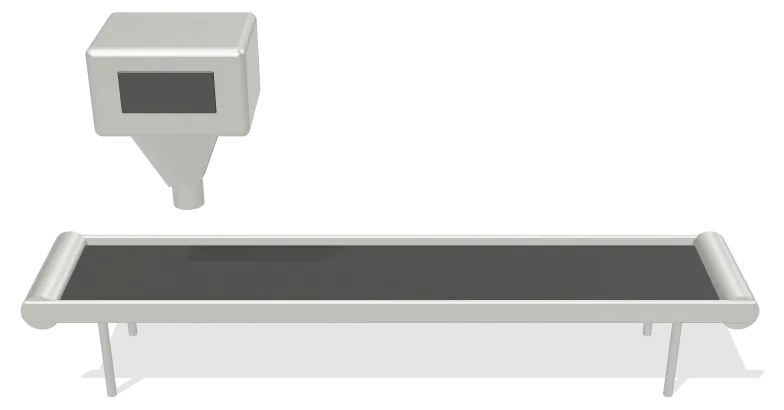
Every piece carries the same amounts: 40 mg natural caffeine, 60 mg L-theanine and ~28 mg magnesium. One piece or two – you decide how much you need, and when.
02
Made by a gum specialist
Vim is produced by a contract manufacturer that specialises in functional chewing gum. [Manufacturer and country to be confirmed.]
03
Tested, batch by batch
Independent third-party lab testing to confirm the caffeine, L-theanine and magnesium content of each batch. Results are published on our Lab results page.
3rd-party tested
PlannedNatural flavours
Natural caffeine
100% vegan
Preservative free
No sugar
No sucralose
No aspartame
No artificial colours
No plastic
FAQ
Ingredient questions.
6 questions
What exactly is in Vim?
[DRAFT] Xylitol, chicle gum base, natural flavour, guarana extract (natural caffeine), L-theanine, magnesium citrate, sea salt, steviol glycosides. [Final list in order of weight from the manufacturer. Fruit flavours may also contain erythritol and malic acid.]
Full nutrition information will be on the product page and on the tin.
Why add L-theanine to caffeine?
L-theanine is an amino acid that occurs naturally in tea leaves, alongside caffeine. The pairing is widely studied in nutrition research. Vim uses it at a 1 : 1.5 ratio: 40 mg caffeine to 60 mg L-theanine per piece.
Why xylitol and stevia?
We wanted to sweeten Vim without sucralose, aspartame or acesulfame-K. Xylitol is a sugar alcohol found naturally in many fruits and vegetables – in Finland, it's famously made from birch. Steviol glycosides come from the leaf of the stevia plant.
What does a plastic-free gum base mean?
Most conventional chewing gum bases are made from synthetic polymers. Vim uses chicle, a natural gum from the sap of the sapodilla tree. [Pending manufacturer confirmation.]
How many pieces can I chew in a day?
[Serving guidance and maximum daily intake – wording from regulatory consultant.]
Who shouldn't use Vim?
[Mandatory caffeine warning, plus the polyol notice required for products with more than 10% added polyols such as xylitol – wording from regulatory consultant.]

Now you know what's in it.
- Tin and guide free with your first subscription order
- Free shipping on every plan delivery